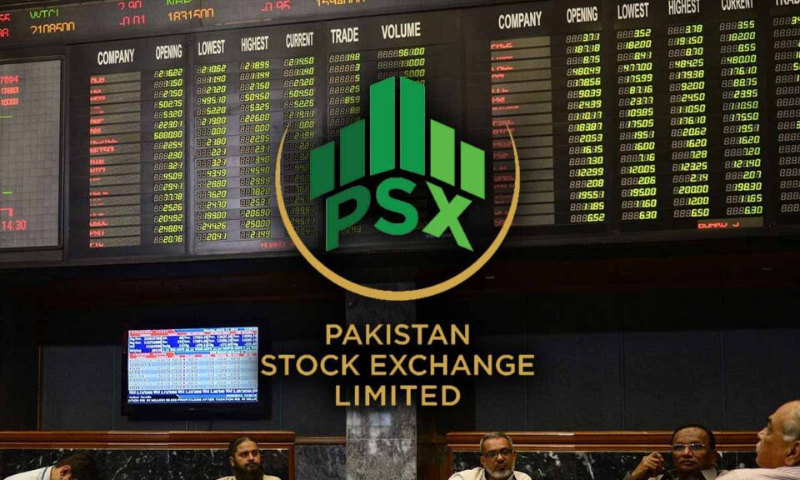
The Pakistan Stock Exchange (PSX) is the sole stock exchange in Pakistan, formed in 2016 through the merger of the Karachi Stock Exchange (KSE), Lahore Stock Exchange (LSE), and Islamabad Stock Exchange (ISE). This consolidation aimed to create a unified, more efficient, and robust capital market.
The journey began with the establishment of the Karachi Stock Exchange (KSE) in 1947, shortly after Pakistan’s independence. It started with just 13 companies and a modest capital base. Over the decades, KSE grew to become one of the most prominent stock exchanges in the region, known for its high returns and occasional volatility. The Lahore Stock Exchange (LSE) and Islamabad Stock Exchange (ISE) were established later to cater to regional investment needs. The merger into PSX was a landmark event, streamlining operations and paving the way for greater integration and modernization.
Here are some important milestones in the life of Pakistan Stock Exchange:
- 1947: Establishment of the Karachi Stock Exchange (KSE).
- Early 2000s: A period of significant growth and liberalization, attracting foreign investment.
- 2008 Financial Crisis: Like global markets, PSX experienced a severe downturn, leading to a temporary floor being placed on the KSE-100 index to prevent further collapse.
- 2016: The historic merger of KSE, LSE, and ISE to form the Pakistan Stock Exchange (PSX).
- 2017: A 40% strategic stake in PSX was acquired by a Chinese consortium, including China Financial Futures Exchange Company Limited, Shanghai Stock Exchange, Shenzhen Stock Exchange, Pak China Investment Company Limited, and Habib Bank Limited. This investment marked a significant step towards international collaboration and modernization.
- Post-2017: PSX has continued efforts towards technological upgrades, improved regulatory frameworks, and attracting both local and foreign investors.
The stock exchange is an indispensable component of the global financial architecture, serving as a vital conduit for capital formation and wealth creation. Its indices, like the KSE-100, act as barometers of economic health, influenced by a complex web of economic, political, corporate, and psychological factors. The Pakistan Stock Exchange, with its rich history and ongoing evolution, continues to play a pivotal role in Pakistan’s economic development, providing a platform for businesses to grow and for individuals to participate in the nation’s prosperity.
Following dashboard shows historical data of Pakistan Stock Exchange.
The stock exchange stands as a cornerstone of modern financial systems, a dynamic marketplace where wealth is created, capital is allocated, and economic growth is fueled. Far more than just a place to buy and sell company shares, it is a complex ecosystem reflecting the collective sentiment and economic health of nations. This essay will delve into the fundamental workings of a stock exchange, elucidate the concept of a stock market index and its fluctuations, explore the myriad factors influencing these indices, and finally, provide a detailed introduction to the Pakistan Stock Exchange (PSX), tracing its history, major events, and key characteristics.
At its core, a stock exchange is an organized and regulated market where securities, primarily stocks and bonds, are traded. It provides a platform for companies to raise capital by issuing shares to the public (the primary market) and for investors to buy and sell these existing shares among themselves (the secondary market). Without a stock exchange, companies would find it significantly harder to finance expansion, innovation, and job creation, and individuals would have fewer avenues for long-term investment and wealth accumulation.
The process on a stock exchange is facilitated by a network of brokers and financial institutions. When a company decides to “go public” through an Initial Public Offering (IPO), it sells its shares for the first time. This is the primary market. Once these shares are owned by investors, they can be traded on the secondary market. An investor wishing to buy or sell shares places an order with a brokerage firm. The broker then executes this order on the exchange, matching buyers with sellers. Transactions are typically conducted electronically, ensuring speed, transparency, and efficiency. The price of a stock at any given moment is determined by the forces of supply and demand: if more investors want to buy a stock than sell it, its price will generally rise, and vice versa.
A stock market index is a statistical measure that represents the performance of a specific segment of the stock market or the market as a whole. It is a weighted average of the prices of a selection of stocks, chosen to be representative of the market or a particular industry. For instance, the Dow Jones Industrial Average tracks 30 large U.S. companies, while the S&P 500 includes 500 large U.S. companies, offering a broader market view. In Pakistan, the KSE-100 Index serves a similar purpose.
Following dashboard will allow you to compare PSX Indices. Simply select by sector or name. You can also select years to limit historical data.
An index rises when the weighted average price of its constituent stocks increases, indicating a general upward trend in the market or sector it represents. Conversely, it falls when the weighted average price decreases. The movement of an index is not simply an average of price changes; it often accounts for factors like market capitalization (the total value of a company’s outstanding shares). Larger companies typically have a greater impact on the index’s movement than smaller ones. For example, if a heavily weighted stock in an index experiences a significant price increase, it will have a more pronounced positive effect on the index than a similar percentage increase in a lightly weighted stock. The rise and fall of an index reflect the aggregate investor sentiment and the perceived health of the economy or specific industries.
The fluctuations of a stock exchange index are influenced by a complex interplay of various factors, both domestic and global:
- Economic Indicators: Macroeconomic data plays a crucial role. Positive indicators like strong GDP growth, low inflation, high employment rates, and robust industrial production tend to boost investor confidence, leading to index gains. Conversely, weak economic data can trigger sell-offs and cause indices to fall. Interest rate changes by central banks also significantly impact the market; higher rates can make bonds more attractive and increase borrowing costs for companies, potentially dampening stock prices.
- Company Performance: The financial health and earnings of the companies listed on the exchange are paramount. Strong corporate earnings reports, positive future outlooks, successful product launches, and effective management strategies can drive up individual stock prices, which in turn contribute to the rise of the overall index. Conversely, poor earnings, scandals, or negative news about major companies can drag the index down.
- Political Stability and Policy: A stable political environment fosters investor confidence. Government policies related to taxation, trade, regulation, and fiscal spending can significantly impact corporate profitability and market sentiment. Uncertainty or instability, such as elections, geopolitical tensions, or sudden policy shifts, often leads to market volatility and declines.
- Global Events: In an increasingly interconnected world, global events have a profound impact. International trade agreements, commodity price fluctuations (especially oil), global economic recessions, pandemics, and major geopolitical conflicts can trigger ripple effects across stock markets worldwide, affecting even seemingly distant indices.
- Market Sentiment and Investor Psychology: Beyond fundamentals, market sentiment—the overall attitude of investors towards a particular market or asset—is a powerful force. Fear and greed often drive market movements. Positive news can create a “bull market” (rising prices), while negative news or uncertainty can lead to a “bear market” (falling prices). Speculation, rumors, and herd mentality can sometimes cause irrational exuberance or panic selling, leading to sharp, short-term fluctuations.